Easy French Toast
Easy French toast turns everyday bread, eggs, and milk into a warm breakfast with golden edges and a soft, set centre. It uses familiar ingredients and takes about 45 minutes, including the time to cook several batches in a typical home skillet.
Thick, slightly dry bread is easier to dip without falling apart. The key is to coat each slice without soaking it until floppy, then cook it over moderate heat until the egg mixture is set.
Why This Easy French Toast Works
A simple egg-and-milk custard coats the bread without special ingredients. Slices about ¾ inch (2 cm) thick hold their shape, while day-old bread absorbs the mixture more readily than very fresh, soft bread. Dip time varies by loaf, so use the texture cue: the bread should be coated and softened but still hold its shape.
Ingredients and Simple Substitutions
- Bread: Brioche, challah, pain de mie, thick-cut sandwich bread, or another sturdy loaf works. Day-old bread is helpful; very thin or very soft slices can become soggy.
- Milk: Whole milk gives the custard a familiar, mild flavour. Semi-skimmed milk also works. Unsweetened plant milk can be used, though the flavour and texture may differ.
- Eggs: Whisk until the whites and yolks are fully combined so the custard coats the bread evenly.
- Vanilla, cinnamon, and sugar: These add gentle sweetness. The sugar is optional, especially if serving with syrup.
- Butter: Divide the 2 tablespoons between batches and add a little as needed.
How to Make Easy French Toast
- Whisk the custard. In a shallow bowl wide enough for a slice of bread, whisk the eggs, milk, vanilla, sugar, cinnamon, and salt until smooth, with no visible streaks of egg white.
- Warm the pan. Set a large non-stick skillet or griddle over medium-low to medium heat. Melt a little of the butter; it should foam gently without smoking or browning rapidly.
- Dip the bread. Dip each slice individually, turning to coat both sides. For many ¾-inch slices, about 5–15 seconds per side is a useful starting range. Dip soft, fresh bread for less time; drier, sturdier bread may need longer. Lift the slice while it still holds its shape, and let excess custard drip back into the bowl.
- Cook a batch. Place the slices in the pan in one layer without crowding. Cook for about 3–4 minutes per side, adjusting the heat if the outside browns before the centre sets.
- Check doneness and finish. The toast should be golden, with a set centre and no visibly wet egg mixture. A golden exterior alone does not confirm that the centre is cooked. When an internal temperature can be measured accurately, cook egg dishes to 160°F (71°C). Add more butter as needed and cook the remaining slices in batches.
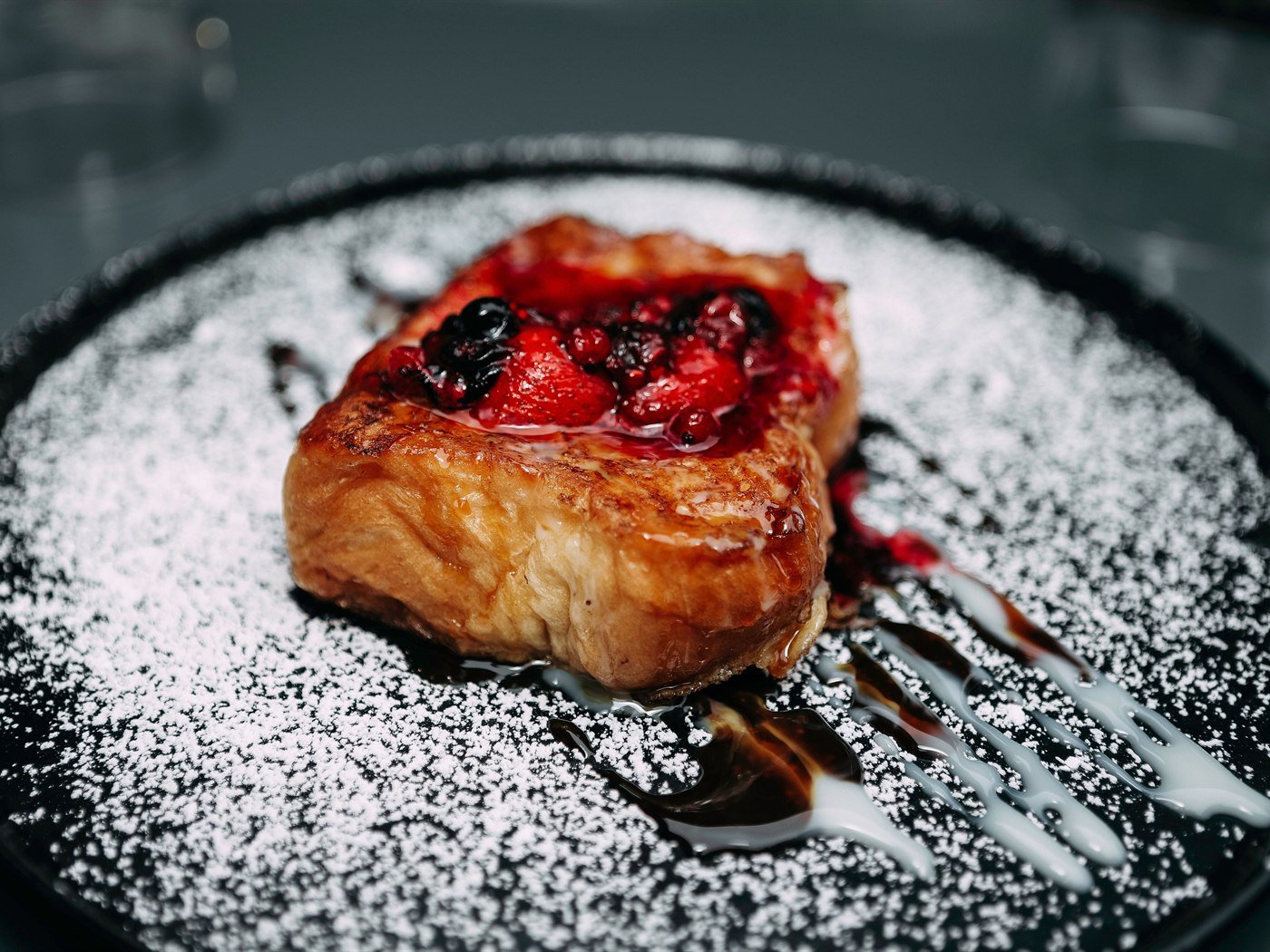
- Serve. Serve warm with optional maple syrup, berries, or confectioners’ sugar.
A typical skillet holding two slices at a time will need several batches. Allow about 35 minutes for cooking, but expect the time to vary with pan size, heat, and the bread.
Tips for Golden, Not Soggy French Toast
- Choose sturdy slices about ¾ inch (2 cm) thick; day-old bread is useful.
- Dip one slice at a time and adjust the dip to the bread instead of soaking every slice for a fixed period.
- Keep the pan at moderate heat. If the outside browns before the middle sets, lower the heat.
- Avoid crowding the pan; batches cook more evenly and are easier to turn.
- Discard any remaining uncooked dipping custard after cooking. Do not save it for another use.
Serving Ideas
Serve with maple syrup and fresh berries, or offer confectioners’ sugar on the side. For a less sweet breakfast, pair French toast with plain yogurt or fresh fruit. Toppings are optional and are not included in the recipe quantities.
For another breakfast idea, try Fluffy Buttermilk Pancakes.
Storage and Reheating
Refrigerate leftovers in a covered, shallow container within 2 hours of cooking and use them within 3–4 days. Reheat leftovers to 165°F (74°C). A toaster oven or skillet can help restore some surface texture; a microwave is convenient but may soften the bread. Cooked slices can also be frozen, though their texture may soften after thawing.
Frequently Asked Questions
What bread is best for French toast?
A sturdy loaf sliced about ¾ inch (2 cm) thick is a good choice. Brioche, challah, pain de mie, and thick-cut sandwich bread can all work. Slightly dry bread is less likely to fall apart while dipping.
How long should I dip each slice?
There is no single time that suits every loaf. For many ¾-inch slices, start with about 5–15 seconds per side. Soft, fresh bread needs less time; drier bread may need longer. Lift it when coated and softened but still able to hold its shape.
How long does the recipe take?
Allow about 10 minutes for preparation and about 35 minutes for cooking, for an estimated total of 45 minutes. A small skillet or extra batches may take longer; a larger griddle may take less time.
How can I tell when the French toast is done?
The outside should be golden and the centre set, with no visibly wet egg mixture. Colour alone is not proof that the centre is cooked. Where a thermometer reading is practical, the centre should reach 160°F (71°C).
Easy French Toast
Ingredients
Method
- Whisk the custard. In a shallow bowl wide enough for a slice of bread, whisk the eggs, milk, vanilla, sugar, cinnamon, and salt until smooth, with no visible streaks of egg white.
- Warm the pan. Set a large non-stick skillet or griddle over medium-low to medium heat. Melt a little of the butter; it should foam gently without smoking or browning rapidly.
- Dip the bread. Dip each slice individually, turning to coat both sides. For many ¾-inch slices, about 5–15 seconds per side is a useful starting range. Dip soft, fresh bread for less time; drier, sturdier bread may need longer. Lift the slice while it still holds its shape, and let excess custard drip back into the bowl.
- Cook a batch. Place the slices in the pan in one layer without crowding. Cook for about 3–4 minutes per side, adjusting the heat if the outside browns before the centre sets.
- Check doneness and finish. The toast should be golden, with a set centre and no visibly wet egg mixture. A golden exterior alone does not confirm that the centre is cooked. When an internal temperature can be measured accurately, cook egg dishes to 160°F (71°C). Add more butter as needed and cook the remaining slices in batches.
- Serve. Serve warm with optional maple syrup, berries, or confectioners’ sugar.